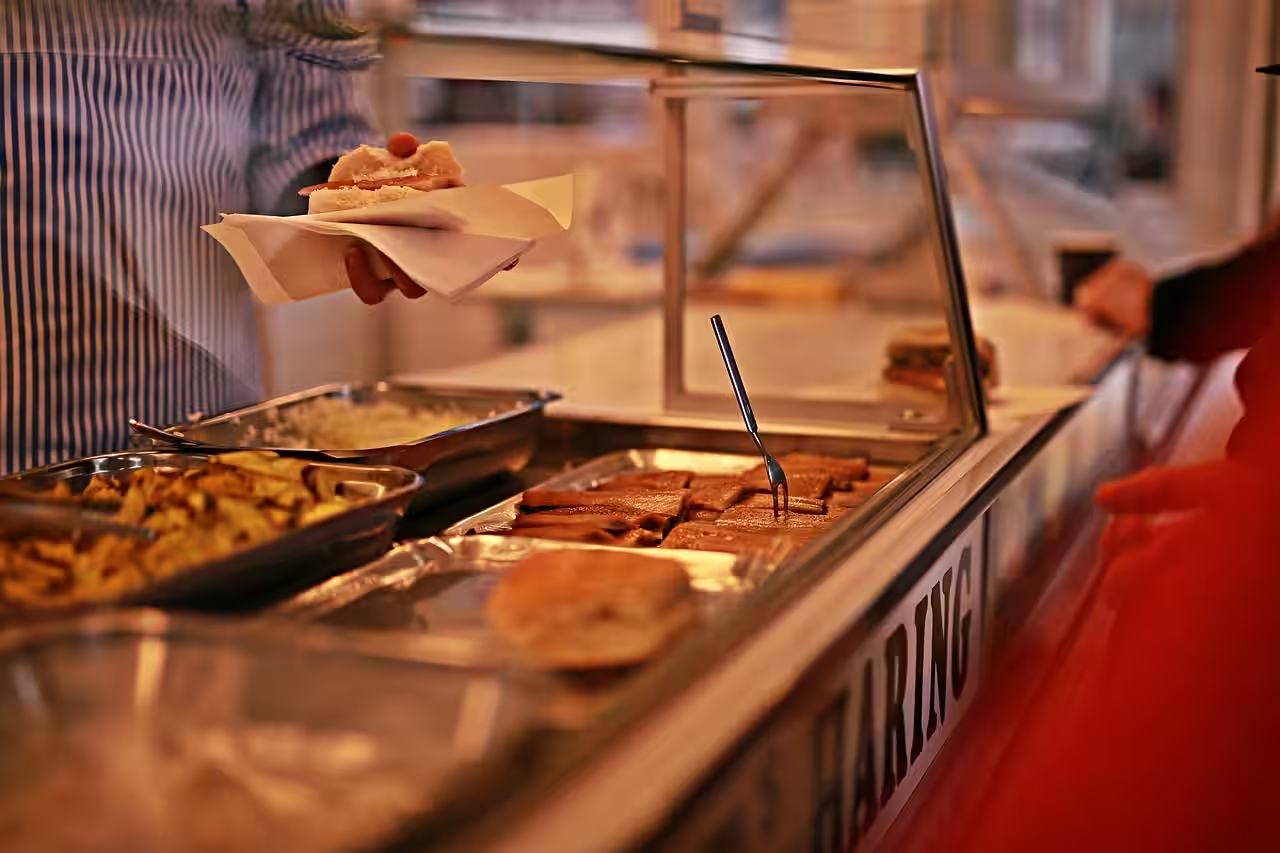
The honest answer is that there is no such thing as a universally profitable format. There are only formats that work in a specific location, for a specific clientele, with a specific organization.
That is precisely where most projects fail. People choose a concept because it’s booming elsewhere, then look for a space. The correct order is the exact opposite.
At Tomorrow Food, we design food service for food courts, train stations, shopping centers, tourist sites, and hotels. We see the same concepts succeed or fail depending on where they are placed.
What defines a fast-food concept that stands the test of time
Before talking about pizza, fried chicken, or K-food, you have to establish the criteria. A fast-food concept is not just a menu idea. It is a production system that must meet four requirements simultaneously.
Reproducible product and rush-hour speed
Fast food is won or lost in two or three hours a day. A format that works at 2:00 PM but falls apart at 12:30 PM is not a viable concept; it’s just a poorly calibrated traditional restaurant.
A good fast-food concept relies on three properties:
- Off-peak preparation. Whatever can be done before service must be done. The formats that dominate the market are those where production is prepared in advance and assembled to order.
- Short and reproducible cooking times. Service time must be predictable and identical, regardless of which cook is on duty.
- A simple product structure. The more components there are, the wider the gap in execution becomes between different locations and different shifts.
This explains the longevity of formats like pizza or burgers.They haven't stayed on top because they are trendy, but because their product architecture is built for volume.
Omnichannel compatibility and sustainable cost price
The second filter is versatility. A fast-food concept must now work for dine-in, takeout, click-and-collect, and delivery, without any drop in perceived quality across any of these channels.
This is a highly discriminating criterion. Some products do not hold up well after twenty minutes of transport. Others require expensive packaging that eats into your margins. The question to ask before validating a concept is not "Is it good?" but "Is it still good upon arrival, and at what packaging cost?".
Finally, the cost price must leave room for profit. In fast food, the average check is low by definition. Profitability comes from volume and strict control over food costs, not from unit margins. A concept with spiraling food costs can never be saved by raising prices, because the segment's customer base is extremely sensitive to pricing.
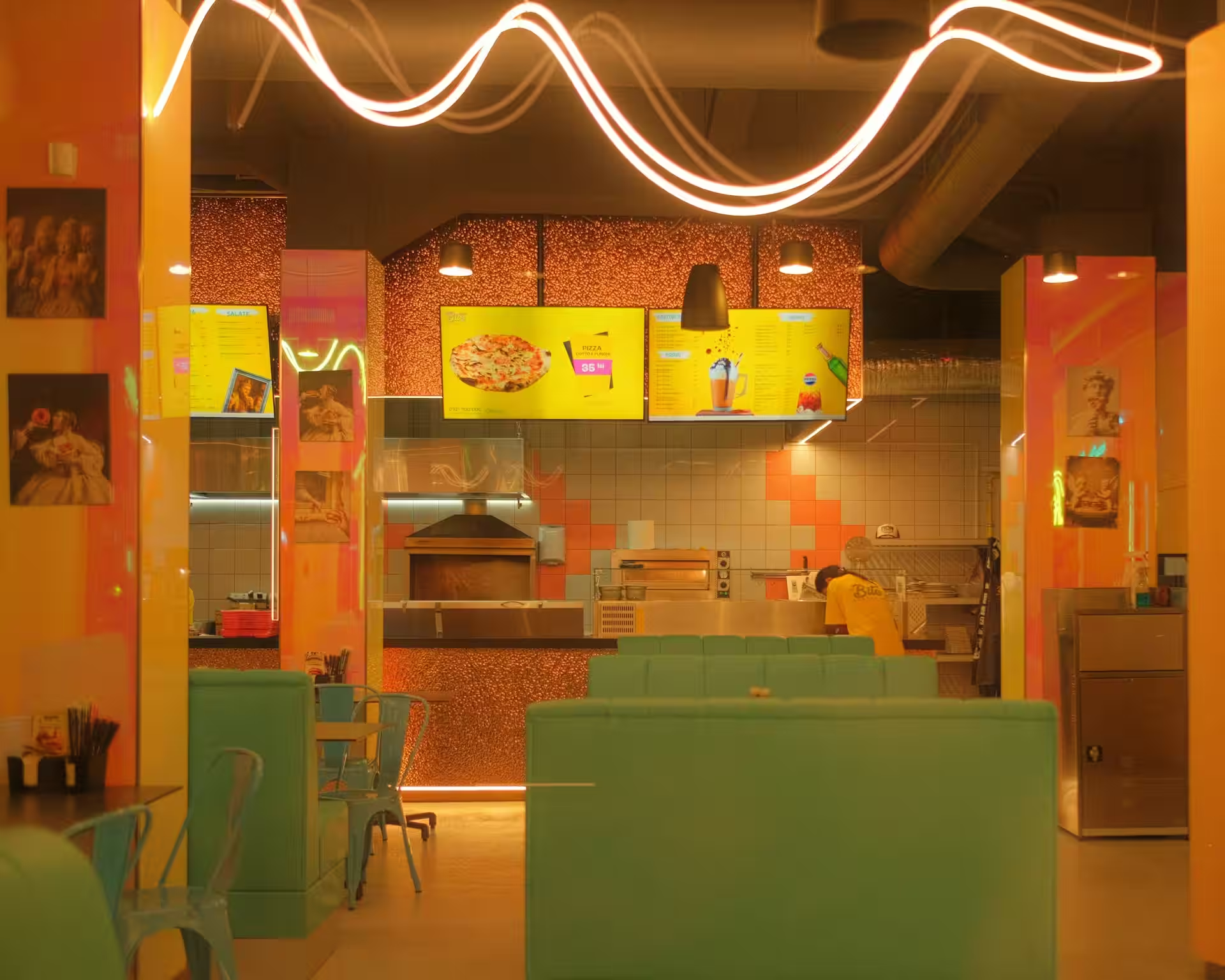
The most profitable fast-food concepts today
Let's move on to formats. We classify them into three families, which follow different logic and require different locations.
Volume formats
These are the historical pillars of the segment. They are no longer gambles, but they remain the safest bets.
Pizza remains the most robust format in the French market. Its production is entirely prepared in advance, its cooking time is short and repeatable, and it is one of the few products that can be transported without major degradation.
It works across all four sales channels without compromise. In return, competitive density is high, and differentiation relies almost entirely on the perceived quality of the product and the location.
The burger offers the best standardization in the sector. The bun-protein-topping structure drastically limits kitchen complexity and makes the concept replicable, which explains the overwhelming dominance of chains in this segment.
Its main strength lies elsewhere: This format can be adapted across the widest range of price points without changing its operational logic. You can offer entry-level burgers or fifteen-euro fast-casual burgers using the same kitchen organization. This flexibility allows you to adjust your positioning to the local catchment area without having to overhaul the concept.
Fried chicken is the segment that has seen the most growth in recent years. It ticks all the boxes for a fast-food format: a simple product that can be turned into tenders, wings, burgers, or bowls, strong appeal among younger generations, and an aesthetic perfectly suited for social media.
The density of specialized restaurants remains lower than in more mature markets, which leaves room for growth. The trade-off is that competition moves into high-traffic locations very quickly.
Growing fast-food concepts
K-food is the most visible trend right now. Driven by powerful cultural soft power, Korean cuisine arrives with a rare advantage: customers already have points of reference and a desire to try it.
It fits naturally into the segment's codes, with bowl and street food formats, a strong visual identity, and a perception of nutritional balance. The market is not yet structured, which represents both the opportunity and the risk. Standards are not set in stone, and market positioning is still being defined.
But execution is demanding: precise flavor balances, techniques that are more complex than the segment average, and less standardized sourcing. The challenge lies in industrializing without simplifying to the point of losing what makes the cuisine unique.
Bowl formats and Eastern Mediterranean cuisines are growing based on the same logic: assembled products, high potential for customization, good transportability, and a perception of higher quality than traditional fast food.
Fast-good and better-for-you
This is the segment growing fastest in value, and the one that most interests property developers and site operators.
The principle is fast food built on seasonal, minimally processed cuisine, often Mediterranean-inspired, designed to be both desirable and healthy.
It is no longer a niche for activists: it has become a full-fledged restaurant category, with brands capable of competing with major fast-casual chains in terms of foot traffic and average check size.
What has changed is the level of execution. The players shaping this market are focusing on design, atmosphere, generous portions, and the overall dining experience. It feels more like a lifestyle hotel lounge than a sandwich shop. This justifies the price point.
It is currently one of the most under-exploited segments in the French market, particularly in business districts and densely populated office areas, where the demand exists and the current offering remains largely standardized.
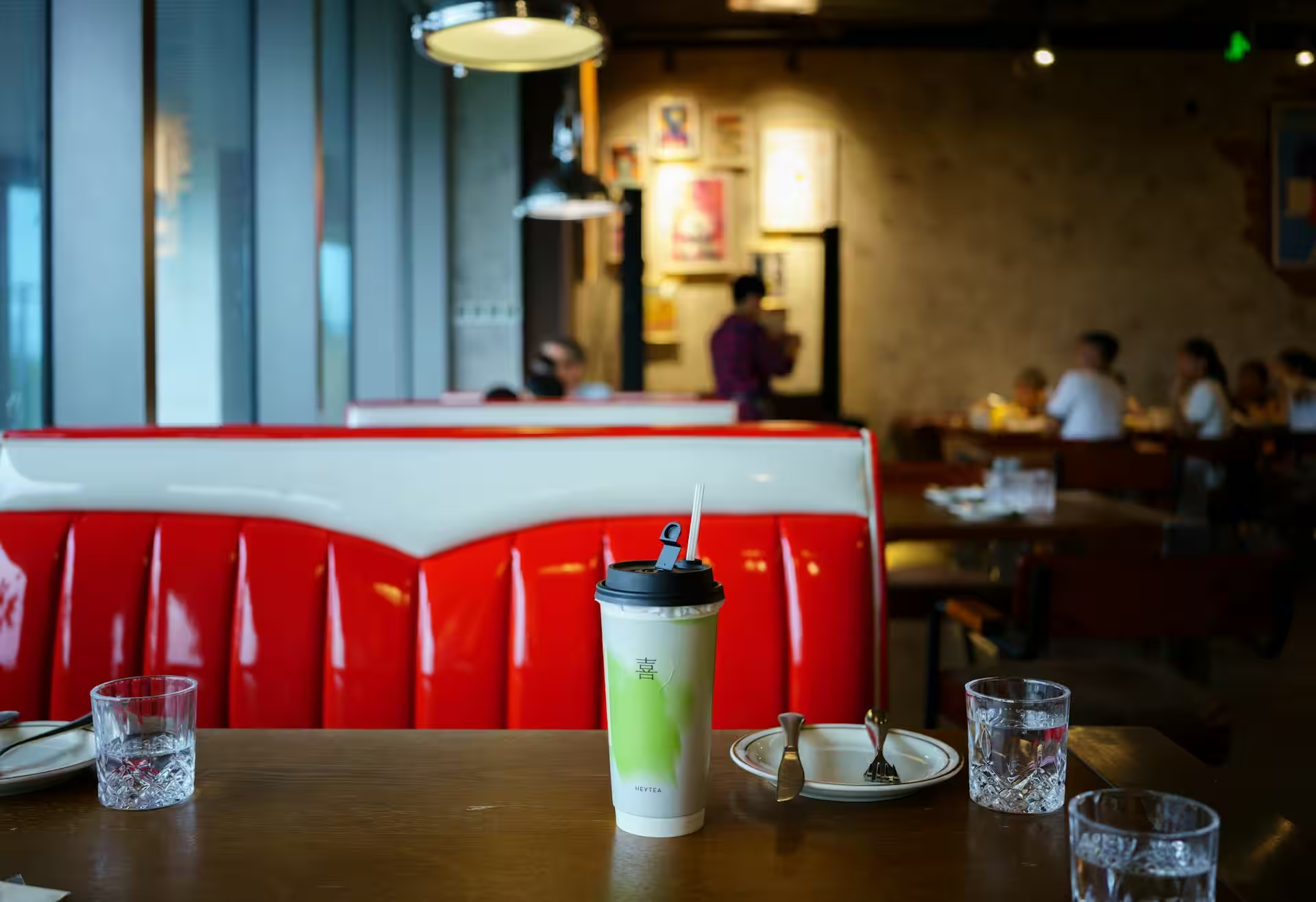
Fast food concepts: which format for which location?
This is the part rarely discussed elsewhere, yet it determines the bulk of the outcome. The same concept, placed in two different locations, produces two radically different economic results.
Train stations, airports, and transit hubs
The customer is in a hurry, constrained, and on a linear path. They buy while on the move.
What this requires: immediate readability of the offer, service times under a minute, food that can be eaten standing up or on the go, and packaging designed for transport. The formats that work are those whose promise is understood from ten feet away, without needing to read a menu.
What fails: concepts that require lengthy customization, extensive menus, or products that require sitting down.
Traffic is massive but extremely concentrated in time. A concept that cannot keep up with very short, intense peaks loses half its potential.
Shopping centers and food courts
The challenge changes completely. The customer is not in a hurry; they are browsing, often in a group, and their choice is made by comparing neighboring stalls.
What this requires: strong visual differentiation from neighboring brands, shareable offerings, and the capacity to handle weekend and holiday peaks. In a curated food court, the logic is one of complementarity: your concept must bring something the others don't, otherwise you will cannibalize each other.
The economic advantage is real: shared common areas, restrooms, and collective drawing power. In return, occupancy costs are often indexed to revenue.
City centers, business districts, and suburbs
In business districtsWeekday lunches drive the bulk of revenue within a two-hour window, catering to high-spending customers with rising quality expectations. This is the natural territory for fast-good and "better-for-you" formats. The structural point to watch is that weekends and holidays are dead. The model must be calibrated for eleven months of productive activity.
In commercial city centertraffic is more spread out and diverse. High-volume formats and social concepts that work well in the evening find their place here. Rent is the primary expense to monitor.
In suburbs and along major roadsdrive-thru and takeout formats dominate. Visibility from the road, accessibility, and parking matter more than the quality of the location. Significant potential remains in mid-sized cities, where the density of specialized chains is still significantly lower than in major metropolitan areas.
The mistakes that kill a fast-food concept
They repeat themselves with troubling regularity.
Choosing the concept before the location
This is by far the number one cause of failure. A concept is a response to a catchment area, not a personal preference. A format that is a hit in a shopping mall might be unsellable in a train station—not because it is bad, but because the customer journey is completely different.
The method is to start with the foot traffic: who is passing by, at what time, for what reason, with what budget, and what are they already finding nearby? The concept should be derived from this analysis.
A menu that is too broad for production capacity
The second destructive reflex. Adding items to avoid losing any customers, ends up losing everyone: service times increase, inventory becomes scattered, waste rises, and quality becomes inconsistent.
In fast food, production constraints take precedence over commercial desires. A short menu, executed flawlessly during peak hours, always beats a broad menu that is poorly served.
The other most costly mistakes can be summarized in a few points:
- Copying a concept without understanding its economics. What is visible about a brand is the product. What keeps it running is its purchasing process, technical specifications, and hourly productivity.
- Under-dimensioning storage. Storage space is the last thing to be considered and is always in short supply. Yet, it determines the ability to handle a busy weekend.
- Neglecting the physical customer journey. The queue, the pickup area, and the flow between the register and the dispatch area determine the number of customers served per hour just as much as the kitchen does.
- Confusing virality with a solid business foundation. A concept that takes off on social media attracts trial traffic. The question that matters is what remains twelve months later, once the curiosity has faded.
Building your fast-food concept: the method
- Analyze the location first and foremost. Nature and volume of foot traffic, hours, reasons for visiting, and profiles of local, tourist, and professional clientele. This is the foundation.
- Map the existing supply in the area. What is saturated, what is missing, what is underperforming. A concept is built in a gap in the market, not by competing directly with established offerings.
- Define the format and price positioning. The format stems from the customer journey, and the price stems from the area's purchasing power. Both must be validated together.
- Build the menu and technical specifications. Short menu, food cost calculated per portion, timed assembly processes, and measured hourly capacity.
- Design the flows and the layout. Kitchen layout, pickup area, circulation, and checkout points. This is where productivity is won or lost.
- Right-sizing the organization. Staffing grid by time slot, versatility, procedures, and training plan. The best-conceived concept will not hold up without a well-calibrated team.
- Test before you scale. Corners, pop-ups, temporary residencies. A real-world test costs infinitely less than a failed launch.
Work with Tomorrow Food
Our business is to design and open living and dining spaces throughout France, across all sectors. We work on food courts spanning several thousand square meters, hotel restaurants, tourist sites, train stations, and high-traffic areas.
What we bring to a fast-food project: market positioning and local competition studies, foot traffic and location profitability analysis, concept, menu, and pricing strategy reviews, kitchen operations and customer journey audits, and support through to operational launch.
If you are developing a project or looking to plan food service for a site, get in touch.