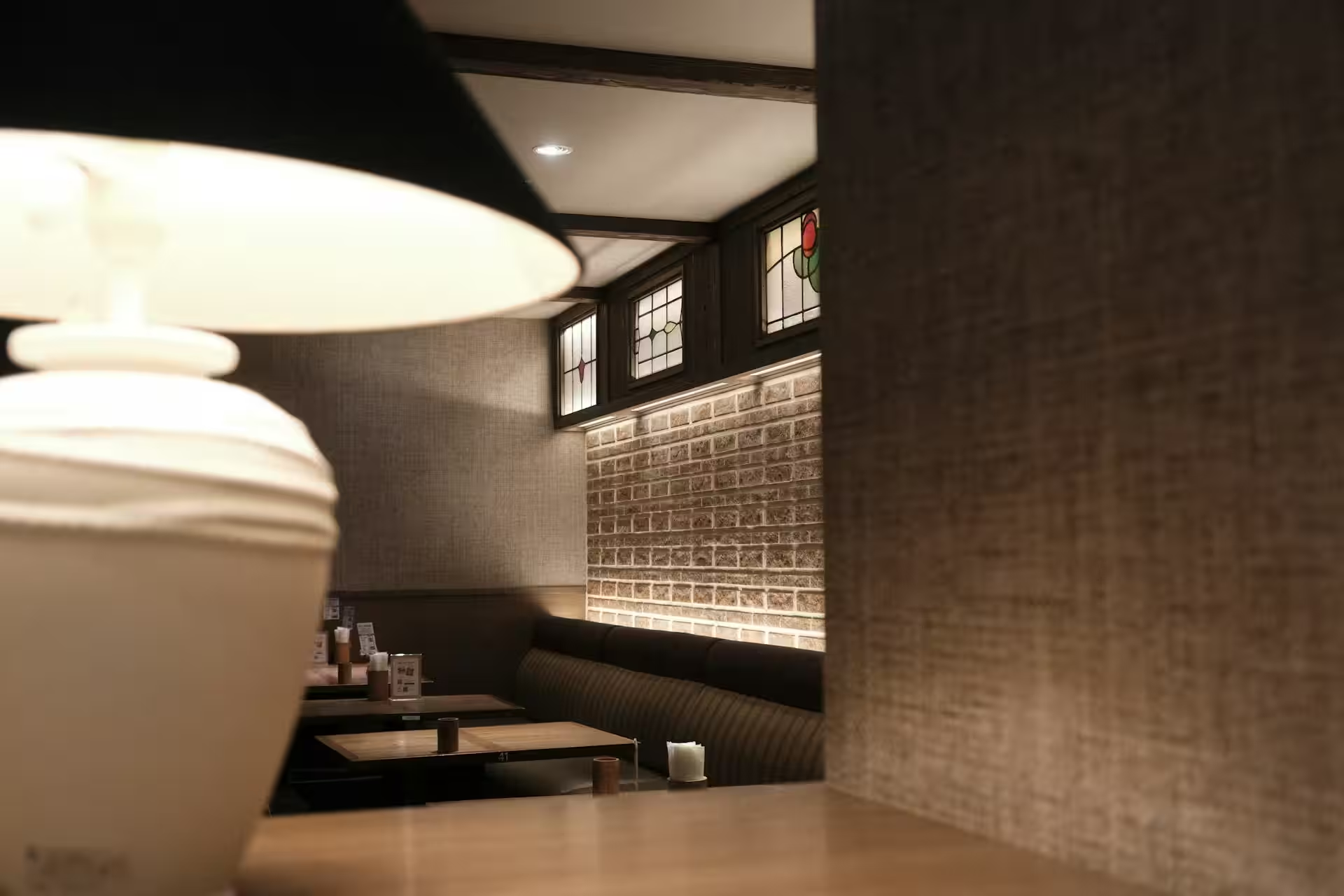
In many towns, the same complaint echoes: "the city center is fading." Fewer outdoor cafes, fewer go-to bars, fewer small restaurants where people meet after work… and, instead, drawn blinds, empty premises, and activity shifting elsewhere.
With municipal elections on March 15 and 22, 2026, just weeks away, the issue is becoming a major problem: a vibrant city center is no longer just about business. It's a matter of quality of life, residential appeal, perceived safety, and social connection.
What do we mean by the desertification of city centers?
The "desertification" of a city center isn't just about empty storefronts. It's the culmination of various factors.
Less foot traffic, therefore fewer reasons to visit
Foot traffic indicators confirm a weakening of central areas.
In 2024, store foot traffic continues to decline, especially in city centers, compared to other areas (city centers vs. suburbs / shopping malls).
Commercial vacancy isn't just a symptom; it accelerates the spiral
When several commercial units become vacant, a "black hole" effect occurs: fewer lit-up storefronts = less foot traffic = fewer purchases = even fewer new businesses.
Nationally, some public reports even suggest a vacancy rate that has significantly increased over a decade..
The real early warning sign: the disappearance of "community hubs"
The most impactful aspect for residents isn't always the closure of a store: it's the loss of social gathering places (bars, brasseries, small eateries, everyday spots).
When these places disappear, the city center loses its role as a "communal living room." and the city loses a driver of vibrancy.
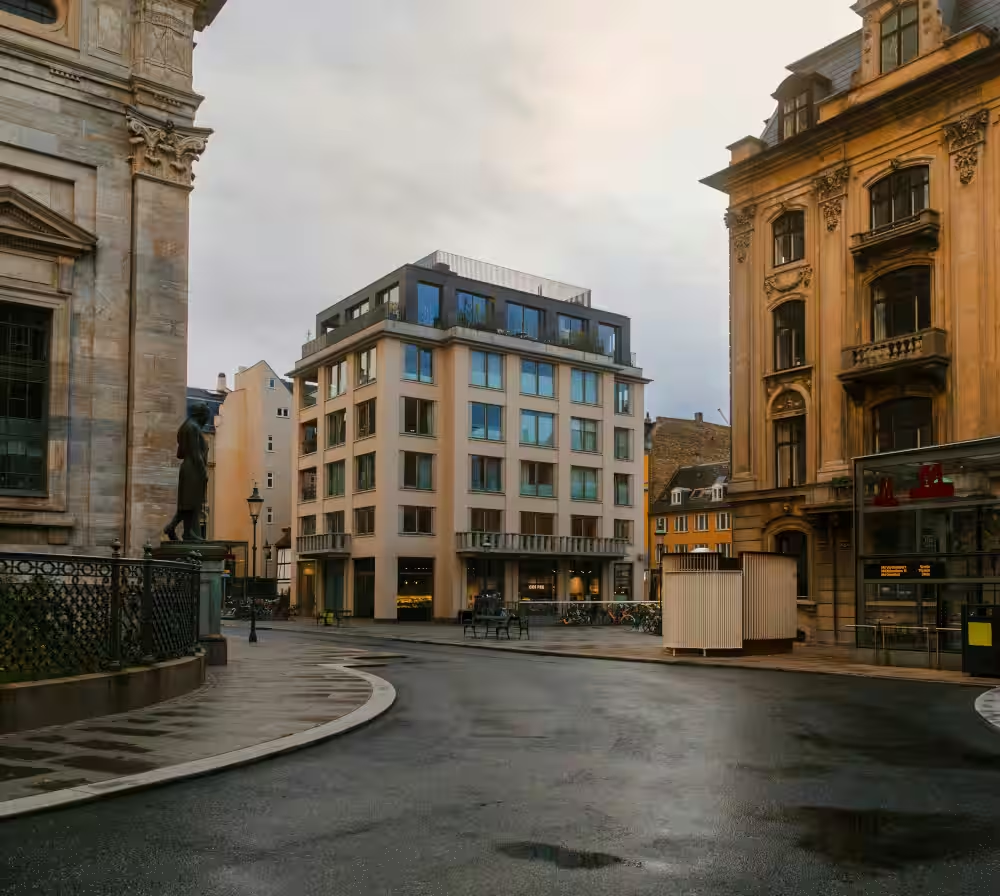
Why are bars and restaurants suffering so much from the decline of city centers?
There isn't one single cause: it's a combination of economic, urban, and real estate factors.
A sector largely under strain
The hospitality sector is going through a difficult period: rising costs, complex recruitment, fragile margins, and business failures that remain a concern according to professional organizations.
The competition from "quick and affordable" and new consumption habits
The growth of fast food (and more broadly, standardized offerings) addresses budget and time constraints. For a segment of the public, it has become the "default" option. However, if convivial offerings no longer differentiate themselves, they find themselves caught between:
- Ultra-optimized concepts (fast food / delivery),
- Premium experiences (occasional),
- At the expense of independent establishments for daily life.
The hurdle of rents and lease conditions
In city centers, prominent locations are expensive and leases can be inflexible.
Consequently, entrepreneurs hesitate, and some businesses can no longer absorb rent, overheads, and payroll, with customer traffic having become unstable.
Accessibility: the contentious issue... but one that matters
When access is perceived as "too complicated" (parking, roadworks, traffic), a portion of customers shifts to simpler areas. Retailers emphasize that accessibility remains a vital point, including for deliveries.
The challenge is not to pit pedestrianization against commerce: it's about creating coherent access zones (deliveries, drop-off points, pedestrian routes, signage, smart parking, etc.).
The decline of city centers is central to the 2026 municipal elections: liveability is a campaign theme
As the elections on March 15 and 22, 2026 approach, city centers are once again central to political platforms, because this topic addresses several dimensions simultaneously.
A vibrant city center is a "lived-in" city center
Commerce alone cannot sustain a central area. Recent strategies emphasize mixed-use: living, working, healthcare, entertainment, shopping… all within the same area.
In other words: recreating community spaces also means addressing housing, services, flows, event programming, and the quality of public space.
Dining as a "marker" of local vitality
A study released in late 2025 shows that some more successful cities exhibit strong identities : local food offerings, everyday services… and, for small towns, a more significant offering of sit-down restaurants than the average.
This is a key idea: dining is not a "bonus"; it's often a trigger.
Beware of the "gimmick solution" effect
"Gourmet food halls" and food courts can bring back foot traffic… but their success is not guaranteed : economic model, operational constraints, balance with existing businesses… Feedback from several projects reminds us that without fine-tuned management, such as that offered by Tomorrow Food for example, the model can become vulnerable.
How to recreate convivial spaces: a 5-lever method
To avoid "cosmetic" actions, a structured approach must be implemented, at the intersection of urban planning, real estate, and operations.
1) Start from real uses (not intentions)
Before revitalizing a restaurant, you need to understand: who comes downtown, at what times, for what reasons, and with what constraints?
Objective: identify the gaps (breakfast, business lunch, after-work, family-friendly, Sunday, seasonality…).
2) Address the economic viability (otherwise it all falls apart)
Without a viable economic model, establishments close or frequently relocate. Therefore, it's crucial to secure:
- A compatible rent level,
- Realistic lease terms,
- A launch support system (renovations, ramp-up period, communication).
3) Develop an offering that "brings people together" (and not just one that feeds)
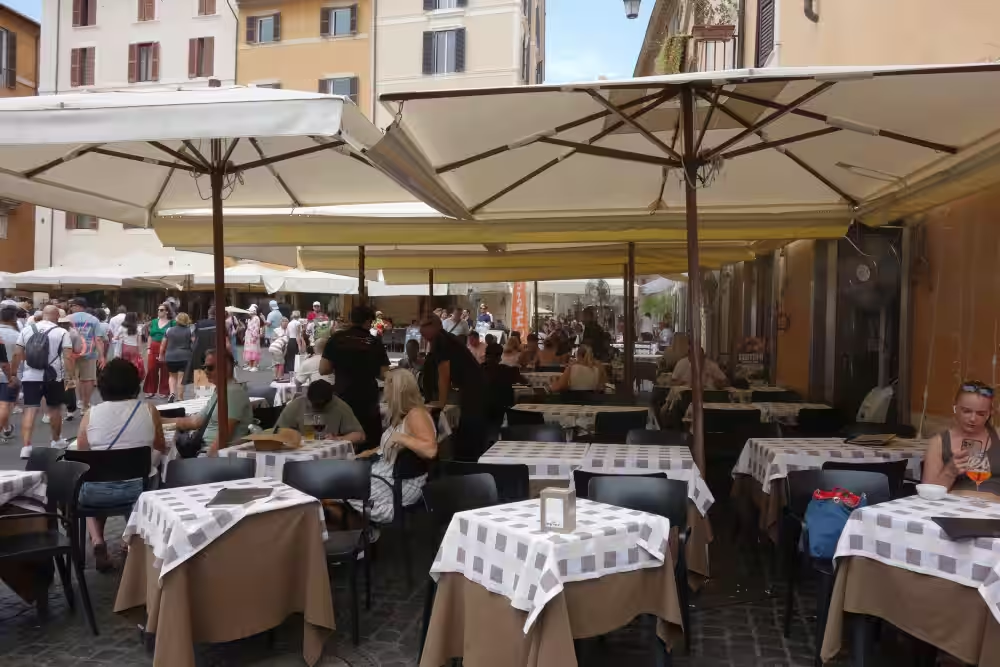
A welcoming atmosphere is built through programming: events, community partnerships, outdoor seating, hybrid formats (café + micro-culture + workshops), extended hours…
The city center doesn't thrive on “more offerings,” but on a more socially beneficial offering.
4) Orchestrating stakeholders (local authorities, property owners, businesses)
The best results rarely come from an isolated player but rather from a collective creating a virtuous cycle. It requires coordination that aligns:
- Local Authorities (vision + public space + regulations),
- Landlords/Property Developers (rental conditions + asset strategy),
- Operators (operational reality),
- Key Community Players (community groups, culture, tourism).
5) Measure, Adjust, Sustain
Revitalization is a multi-year process.
We track simple KPIs: footfall, vacancy rate, tenant turnover, operating hours, satisfaction, and the "moments of life" created. [SEG 8]
Tomorrow Food's role: reconnecting real estate, operations, and local strategy
This is precisely where Tomorrow Food comes in: we
to restore a sense of community in the right place, with the right model.
Tomorrow Food designs
studies, programming, and Food & Beverage concepts , at the intersection of real estate and operations, to create places that "bring people together".
Our support can cover:
usage diagnostics, positioning definition, programming strategy, model security, and operational support, to transform a political intention ("bringing life back") into an economically viable project.
If your city center is losing its bars, restaurants, and meeting places, the issue isn't just commercial: it's urban, social, and strategic. And that's exactly the kind of challenge where a structured F&B approach can make a difference.
To build a realistic conviviality strategy (diagnostics, programming, business model, operator search), you can contact Tomorrow Food now to leverage strong expertise and a tailored offering that will revitalize the central living spaces of our communities.