The hotel industry is entering a phase of structural transformation. The traditional model, centered on accommodation, is giving way to hybrid assets where Food & Beverage is becoming a strategic driver in its own right.
Signature restaurants, experiential bars, rooftops, cultural programming: the hotel no longer simply accommodates; it must now attract, retain, and bring back guests.
This shift is a response to a profound transformation in consumer habits: customers are looking for vibrant places, authentic, capable of offering a comprehensive experience. In this context, F&B acts as an activation engine, capable of generating traffic, increasing dwell time, and enhancing the desirability of an establishment.
From accommodation to destination: the paradigm shift towards multifaceted hospitality
The hotel is becoming a hybrid living space. It no longer caters solely to its overnight guests, but to a broader ecosystem: local residents, lifestyle clientele, professionals, local communities.
This shift necessitates a new strategic approach. F&B can no longer be treated as an ancillary service or a cost center. It becomes:
- An image driver
- A competitive differentiation tool
- A direct revenue generator and indirect one
A well-positioned rooftop can, by itself, transform a hotel's perception. A restaurant with a strong identity can become a standalone destination. A consistent event program can make a venue a local fixture.
A hotel without a clear F&B strategy quickly becomes invisible in the market.
Pluralistic hospitality embodies new concepts and standards
The rise of F&B is part of an experiential approach. Customers are no longer just looking to consume, but to experience something memorable.
This means going beyond a functional approach to build concepts that are:
- Clear
- Consistent with the positioning of the asset
- Differentiating in their market
-
The goal is not to multiply offerings, but to create an overarching narrative, where every F&B touchpoint contributes to a single promise.
A bar, a restaurant, and a rooftop should not merely coexist : they must communicate. Without this consistency, the risk is immediate : identity dilution, customer confusion, and operational underperformance.
Is plurality a strategic opportunity or a risk of fragmentation for the hospitality sector?
The blending of uses opens up a vast array of opportunities, but it significantly complicates management.
Multiplying concepts without structure leads to a fragmented experience. Conversely, a well-thought-out strategy enables :
- Segmenting flows intelligently
- Optimizing peak consumption times
- Pooling operational resources
- Maximizing profitability per square meter
F&B thus becomes a true performance management tool.
Is your F&B offering designed as a coherent whole or as a series of disconnected initiatives?

F&B: A performance driver for diverse hospitality
Beyond its appeal, F&B directly impacts the performance of the hotel asset :
- Increase in RevPAR (revenue per available room) through desirability
- Diversification of revenue streams
- Improved occupancy rate indirect
- Strengthening brand awareness local
But to achieve these results, the standard must be high. Perceived quality, operational consistency, and clear positioning are crucial.
In an industry where both the best and the worst leave a lasting impression, every detail counts. Engaging an F&B programming professional like Tomorrow Food can then enable hotels to create an offering consistent with their positioning and capable of enhancing their image among an increasingly discerning clientele.
Structuring for Performance: A Key Challenge in Multi-faceted Hospitality
Given this complexity, improvisation is no longer viable. Designing a high-performing F&B offering requires:
- A thorough understanding of the market local
- An understanding of usage patterns and flows
- Strategic development of concepts
- A realistic economic projection
- Rigorous operational orchestration
This is precisely where the difference lies between a venue that is merely "active" and one that is truly high-performing.
A successful F&B concept is never the result of chance.
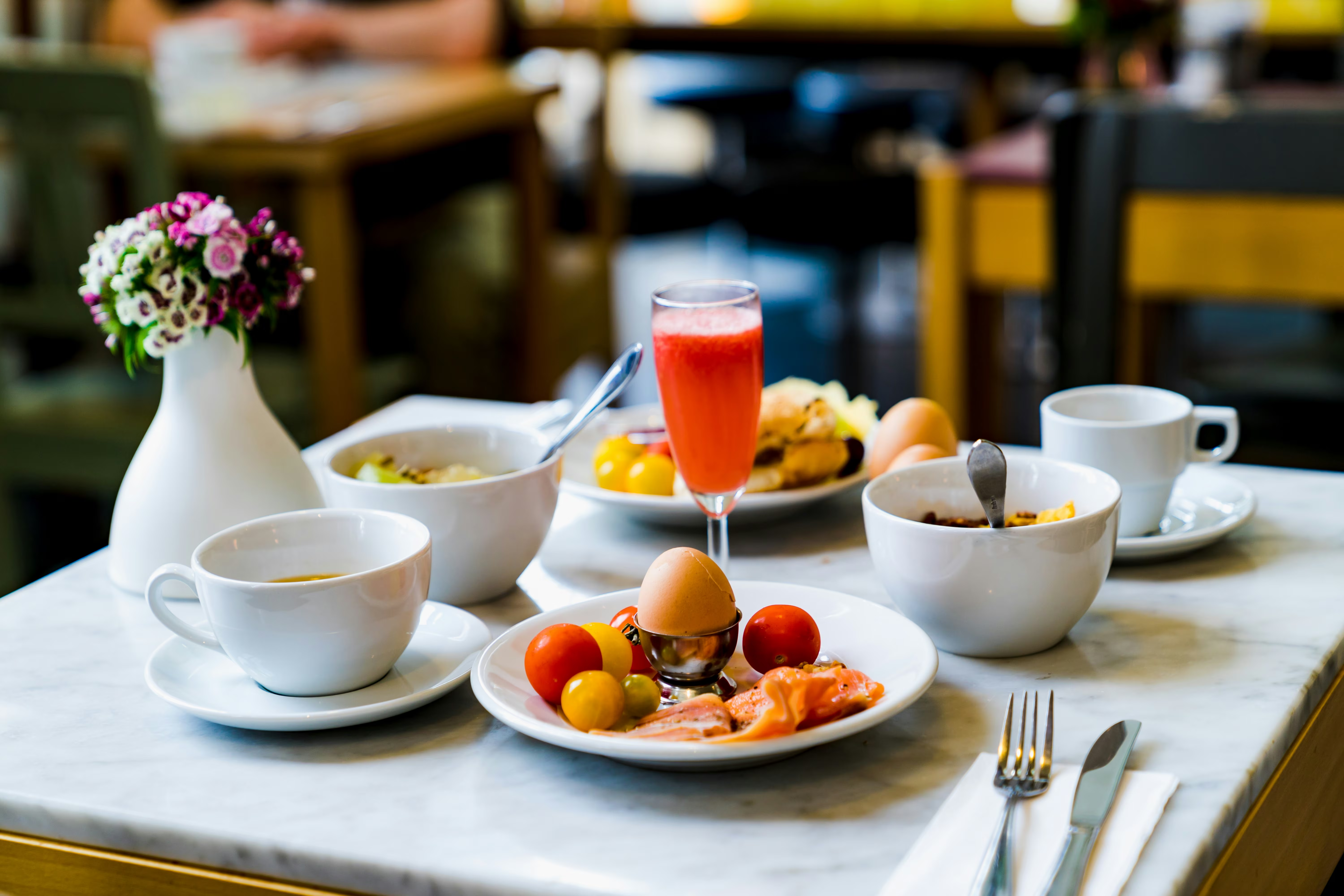
Making F&B a strategic asset within diverse hospitality
Diverse hospitality is not a passing trend. It is permanently redefining industry standards: the establishments that succeed will be those capable of considering F&B not as an extension, but as a strategic pillar of their model.
Only then can the hotel become a destination, attract diverse customer segments and generate sustainable performance.
At Tomorrow Food, we support operators and investors in designing and structuring their F&B strategies. We view F&B as a foundational system, serving the overall performance of the asset.
Our approach is to:
- Align F&B concepts aligned with the hotel's positioning
- Create clear offerings and distinctive
- Organize guest flow to maximize attractiveness and profitability
- Develop programming that can firmly establish the venue in its market
We transform every hotel into an identifiable destination, cohesive and high-performing.
Are you working on a hotel project or a revamp of your F&B offering? Contact us now to turn F&B into a strength for your property.