Shopping mall restaurant audit


%20(1000%20x%20450%20px).png)




%20(1000%20x%20450%20px)%20(2).png)



%20(4).png)
%20(1000%20x%20450%20px)%20(1).png)












%20(1000%20x%20450%20px)%20(4).png)










What is a shopping mall restaurant audit?
A shopping mall restaurant audit is the analysis of an existing operation from all angles: service quality, kitchen/dining room operations, management, organization, and analysis of the profit and loss statement. The objective is a measurement of the gap between the site's ambition, its operational reality, and its potential economic.
It reviews critical areas: purchasing, production, hygiene, maintenance, and cost tracking, while ensuring compliance with obligations (HACCP, safety, accessibility).
It also evaluates the overall experience (customer journey, traffic flow, offering, pricing, visibility), in order to identify the drivers for increasing average spend and the repeat customer rate.
Ultimately, it leads to a continuous improvement approach based on indicators, management rituals, action priorities, and the digital tools necessary for recovery.
What services does a restaurant audit firm offer to a shopping center?
Restaurant audit firms make locations transparent and manageable : they translate an on-site situation into a structured, actionable, and results-oriented diagnosis, with concrete areas for improvement and monitoring indicators.
They examine the positioning of the offering and the actual experience delivered depending on the environment (restaurant, kiosk, food court, in-gallery point of sale), then scrutinize operations : customer journey, production flows, process sheets, inventory and cost management, team organization, and quality level.
Finally, they prepare the decisions to be made : supplier arbitration, purchasing review, team support, operational corrective actions, and monitoring of initial actions to ensure tangible improvement within the first few weeks.
Why engage an audit firm for a shopping center restaurant?
We design
Calibrated analyses (flow, capacities, staffing) to consistently deliver on the promise at the optimal cost.
We offer
Consistent and measurable insights into the experience, designed to identify the drivers for increasing average basket size and visit frequency.
We introduce
Methods and frameworks, tested & learned (pilots, A/B tests) to reduce the risk of error in decisions operational.
We take
into account the seasonality and local specificities to optimize purchasing, staffing, and margins.
We integrate
Digital solutions (POS, ERP, forecasting) to ensure data reliability and professionalize management.
We innovate
by formulating recommendations and operational routines that differentiate without adding complexity.
.avif)
.avif)
.avif)
Who needs a restaurant audit?
Real estate developers & investors
They secure F&B operations to enhance the attractiveness of their assets and secure revenue.
Leisure sector organizations
Museums, parks, and tourist sites further optimize their experiences and average spend thanks to a precise analysis of their F&B offerings.
Station & airport managers
Targeted audits focusing on fast and robust formats allow them to increase yield per square meter and improve customer journeys.
Hospitality sector players
A detailed review of the culinary offering helps to consolidate positioning and elevate customer satisfaction.
Why choose Tomorrow Food audit firm for the restaurants in your shopping centers?
Hands-on expertise
Tomorrow Food leverages a comprehensive operational expertise to improve your location's performance:
- Flow analysis,
- Kitchen/dining room analysis,
- SOP & HACCP,
- Menu performance,
- HR organization,
- Digital tools,
- Definition of actionable KPIs (food-cost, productivity, NPS).
We support the adjustment and optimization of your establishment through detailed diagnostics, action plans, launch audits, and 30/60/90-day roadmaps.
Furthermore, we have a solid expertise in F&B real estate auditing applied to large-scale commercial complexes or to optimizing the value of your asset.
Major projects
Large food courts, luxury hotel restaurants, leisure sites, or transit areas: Tomorrow Food rigorously structures the analysis while remaining tailored to each context.
Their multi-format experience enables them to methodically evaluate complex operations, taking into account the size, challenges, and specific requirements of each project.
We were extremely pleased with the work performed. Tomorrow Food proved to be responsive, efficient, and proactive, demonstrating a deep understanding of F&B challenges. Their expertise was a real asset in moving our project forward.

Collaborating with Tomorrow Food means relying on a team of true food service professionals, highly knowledgeable about the Parisian and French market, and always ready to explore innovative approaches.

When managing the commercial offerings at French train stations, we sometimes need expert support. With its insight into F&B trends, its bold approach, and its commitment to simple, generous cuisine, Tomorrow Food helped us rethink what a significant part of station catering could be (and will be): regional cuisine, accessible to everyone, complementing local restaurant offerings and meeting evolving customer expectations. From menu development to artistic direction, Tomorrow Food assembled a complete and complementary team.
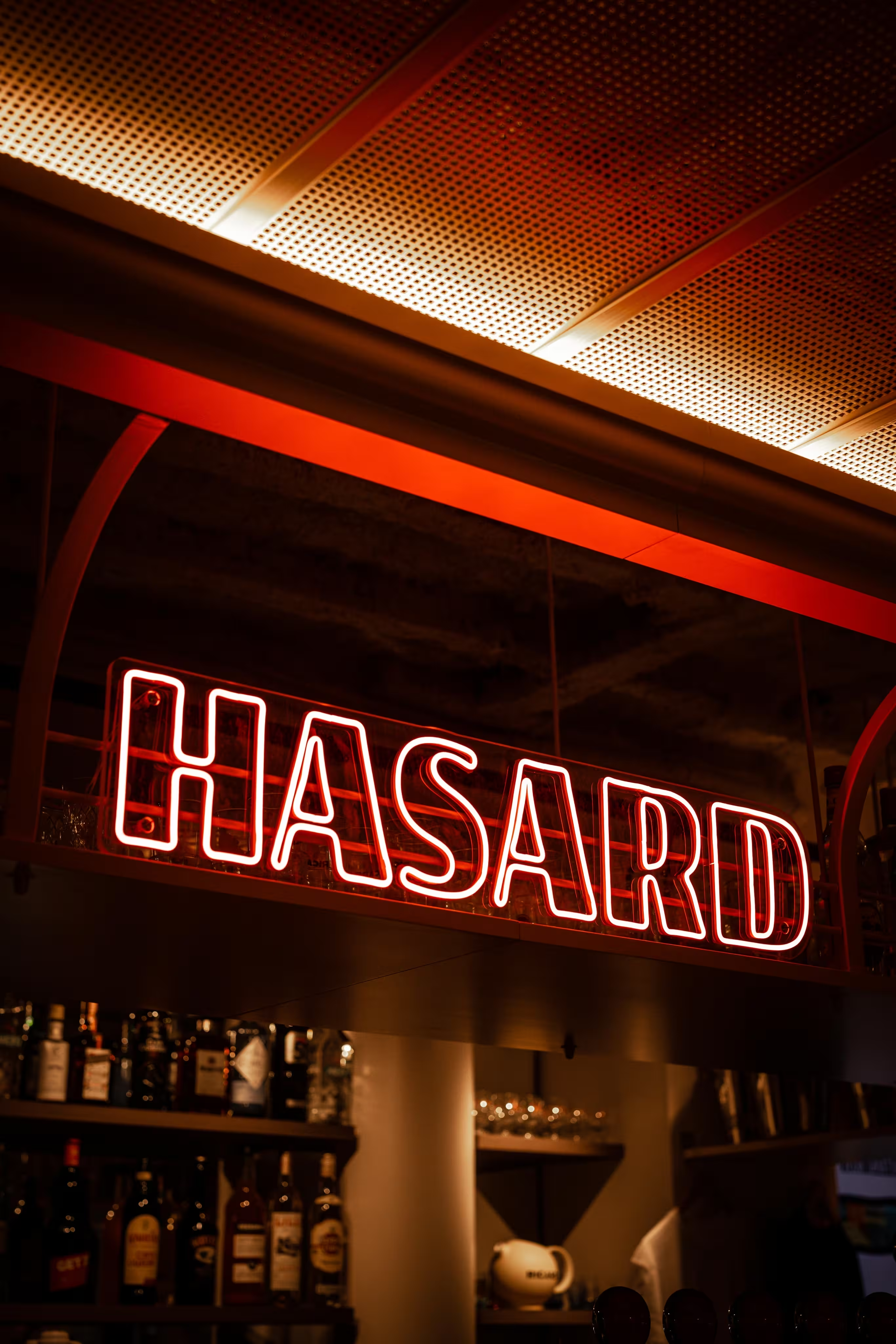
Aiming to launch a retail-focused innovation lab offering food services, we approached Tomorrow Food in 2023. After several weeks of collaborative brainstorming, we conceived an original concept: Bistro Hasard, located near Saint-Lazare Station. Launched in April 2024, this establishment offers innovative gaming-themed experiences. This unique venture required a complete alignment of visions between Tomorrow Food and us, as well as unwavering mutual trust. By combining these two ingredients, we successfully developed a one-of-a-kind establishment that satisfies customers and is becoming a benchmark.

From concept creation to detailed definition, the team demonstrated true professionalism, responsiveness, and valuable expertise. Communication was excellent within the project team and with our board. The financial figures were well-structured and consistent. The TFA team was attentive and willing to challenge themselves to bring our project to fruition.
