Food food marketing refers to all the strategies used to promote a restaurant, a food brand, a food concept, or a catering service. It combines food marketing, branding, social media, customer experience, visual identity, influence, and short-form content to make an offering more desirable, visible, and memorable.
In a highly competitive F&B market, it's no longer enough to offer a good product. You also need to create a clear universe, a legible promise, and content that generates desire even before tasting.
For restaurateurs, hoteliers, food brands, and F&B project developers, food marketing has become a direct lever for acquisition, loyalty, and differentiation. It helps attract customers, strengthen a brand, enhance an experience, and transform a food product into a true object of desire.
For busy readers, food marketing can be summarized in five concrete steps: clarify positioning, audit the customer journey, identify natural content to produce, create recurring formats, and measure results. These steps are detailed further down in this article, after an introduction to the concept and its levers.
What is food marketing?
Food marketing refers to the application of marketing methods to the food sector. It applies to restaurants, hotels, dark kitchens, franchises, artisan brands, consumer goods, caterers, snack concepts, and hybrid food-related venues.
Its purpose is simple: to make a food offering more visible, more understandable, and more attractive to a specific target audience.
Unlike a purely commercial approach, food marketing is not limited to selling a dish or a product. It shapes the overall perception: the name, packaging, decor, photos, brand tone, customer experience, menu, storytelling, social media, and reputation.
A successful food brand doesn't just sell a recipe. It sells a craving, a moment, a lifestyle, or a way of eating.
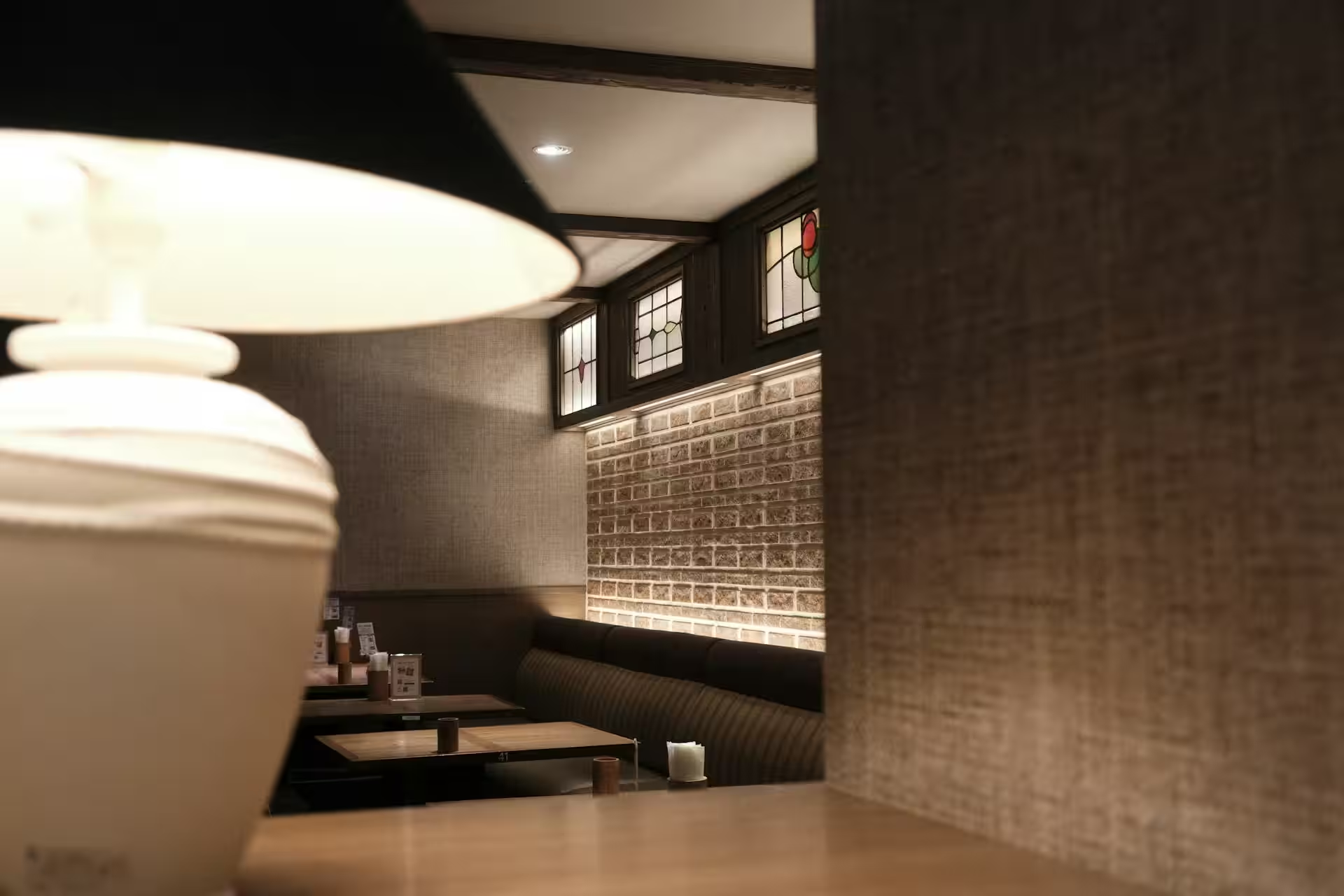
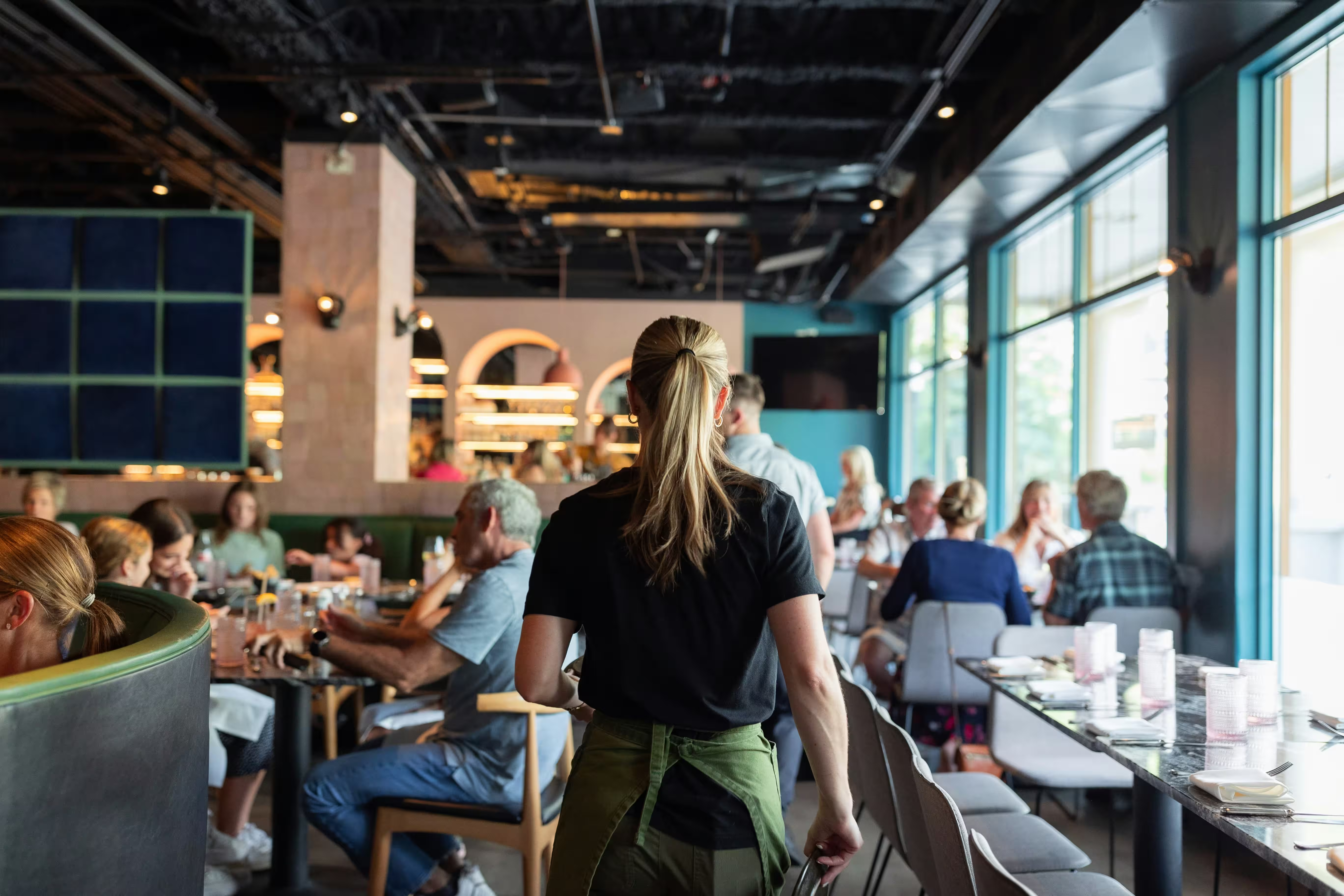
In the restaurant industry, food marketing often begins before the customer arrives. A person discovers a place on Instagram, checks Google reviews, looks at photos, reads the menu, compares prices, gets a feel for the atmosphere, and envisions the experience. The restaurant should therefore be designed as a complete journey, from the first digital impression to the memory left after the meal.
For a food brand, the reasoning is similar. Consumers don't just choose a product for its taste. They are influenced by packaging, nutritional promises, ingredient origin, brand commitments, visibility on shelves, social content, recommendations, and visual cues. Digital food marketing then plays a major role in building preference before purchase.

Food Marketing vs. Traditional Marketing
Food marketing incorporates the fundamentals of traditional marketing:
- positioning,
- target audience,
- value proposition,
- brand identity,
- acquisition channels,
- customer loyalty,
- performance measurement.
But it has a strong specificity: it deals with a sensory product. Food engages taste, smell, sight, texture, memory, conviviality, and sometimes even cultural belonging.
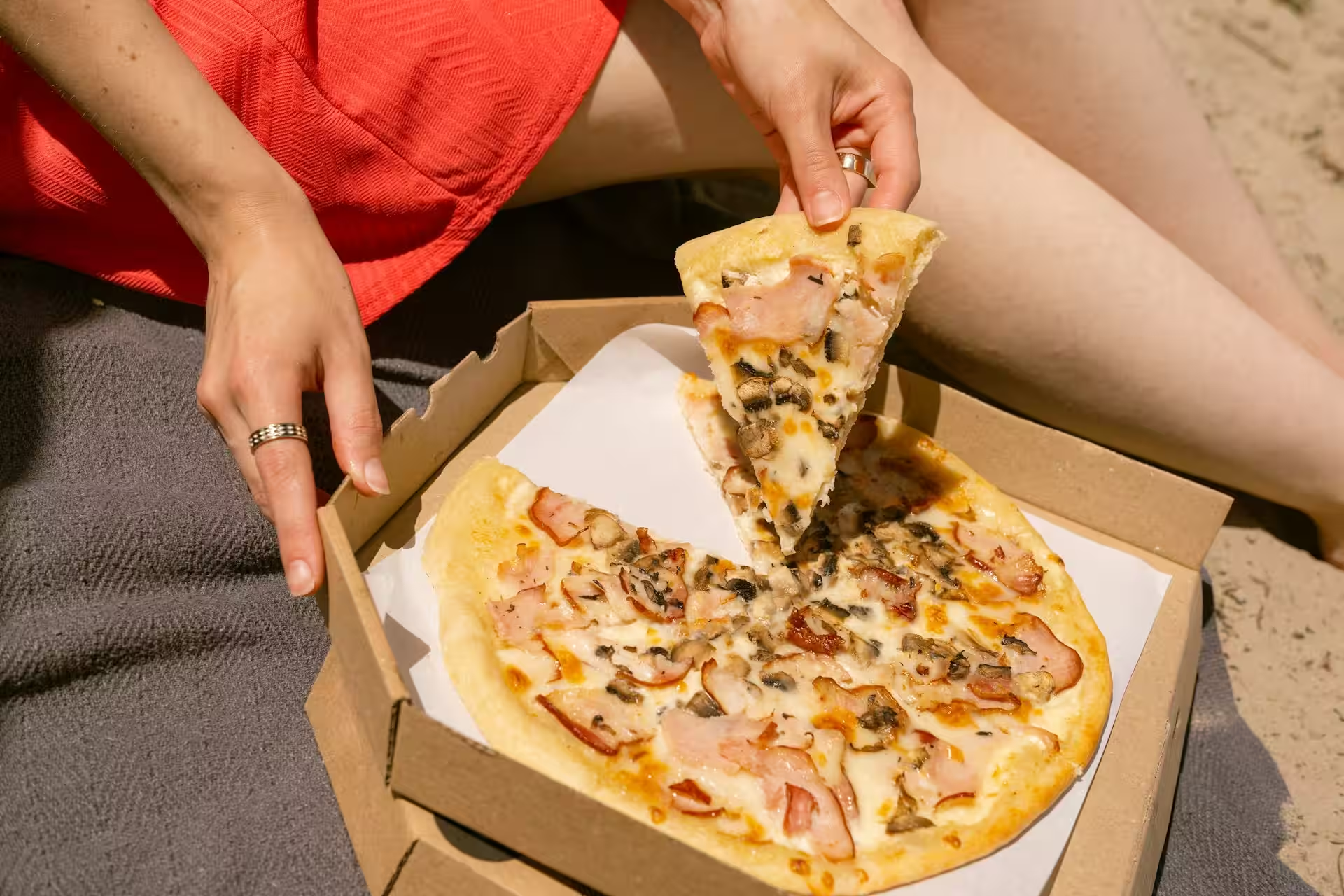
This sensory dimension changes everything. A food marketing campaign needs to evoke a feeling even before the customer tastes the product. Visuals, videos, words, and atmosphere must create an immediate craving. A burger photo, a video of dough rising, a spectacular meat carving, or a dessert filmed with a spoon can trigger a desire much faster than a rational argument.
Traditional marketing can sometimes work with abstract messages. Food marketing, however, must remain concrete, embodied, and visual. It must showcase the product, its use, its consumption moment, its texture, its context, and the promise it holds. A food brand that only talks about quality without showing the ingredients, the process, or the experience risks remaining too detached.
Another important difference: food marketing is closely tied to word-of-mouth. A satisfied customer can recommend a restaurant, post a story, send a photo to a friend, or leave a review. The lived experience becomes an acquisition channel. This is why the restaurant customer experience is an integral part of the topic. The product, location, service, and content must be aligned.
.avif)
The 5 Levers of Food Marketing
Social Media to Make Your Offer Visible
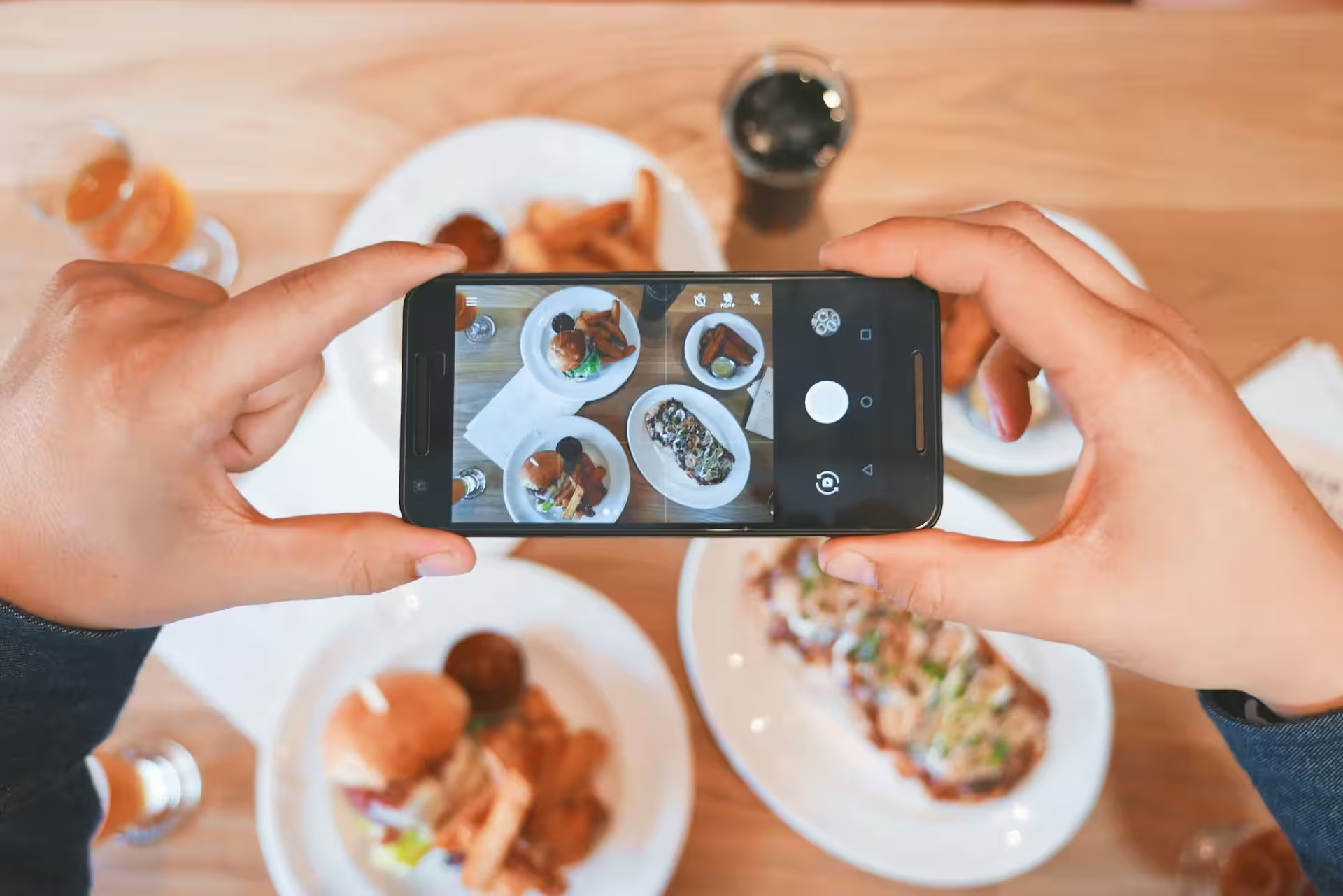
Social media has become one of the main drivers of Food digital marketing. Instagram, TikTok, YouTube Shorts, Facebook, and Pinterest allow you to showcase dishes, behind-the-scenes, the team, preparation techniques, the venue's atmosphere, and new offerings. In the food sector, visuals have immediate impact. They can stimulate appetite, inspire a visit, and enhance brand memorability.
For a restaurant, social media shouldn't merely be for posting food photos. They should convey an experience. Customers should understand the type of venue, the occasion, the atmosphere, the quality level, the team's personality, and the reason to visit. Good social content showcases both the product and the context where it's enjoyed.
For a food brand, social media allows for building credibility, demonstrating usage, and fostering emotional connection. A recipe video, a product review, a tutorial, a usage scenario, or a collaboration with a creator can make the offering more tangible. The content then becomes a catalyst for trust and desirability.
Snackable content to quickly grab attention
The snack content refers to short, simple, and quick-to-consume content. In the food world, it often takes the form of short videos, reels, stories, close-ups on textures, sped-up recipes, impressive techniques, or highly visual formats. It works particularly well because food naturally lends itself to instant content.
Le snack content culinaire peut montrer une pizza qui sort du four, une sauce versée sur un plat, une découpe de viande, une pâte feuilletée qui craque ou une boisson préparée devant le client. Ces séquences courtes ne cherchent pas toujours à expliquer. Elles cherchent d’abord à déclencher une envie, une émotion ou un arrêt dans le fil d’actualité.
Pour être efficace, le snack content doit rester cohérent avec la marque. Un restaurant premium ne produira pas les mêmes formats qu’un concept street food, un coffee shop ou une marque de produits artisanaux. Le fond reste identique : créer des contenus simples, mémorisables et partageables, capables de traduire une promesse food en quelques secondes.
L’expérience client comme levier de différenciation
Le food marketing ne se joue pas seulement en ligne. Il se joue aussi dans le lieu, dans le service et dans le parcours client. Une bonne expérience client restaurant transforme une visite en souvenir. Elle peut renforcer les avis positifs, encourager la recommandation, augmenter le taux de retour et créer une relation plus durable avec la clientèle.
L’expérience commence avant la venue, avec la réservation, les avis, les photos, le menu et la clarté des informations. Elle se poursuit pendant le repas, avec l’accueil, le confort, le rythme du service, l’ambiance, la lisibilité de la carte et la qualité de l’échange avec les équipes. Elle continue après le départ, avec le paiement, les avis, les messages de fidélisation et les contenus partagés.
Un restaurant qui veut renforcer son food marketing doit donc analyser son parcours complet. Où le client découvre-t-il le lieu ? Qu'attend-il avant de venir ? Quels sont les irritants pendant le repas ? Quels moments méritent d'être photographiés, filmés ou racontés ? Cette approche permet de relier marketing, exploitation et expérience réelle. Pour cartographier précisément ces points de friction, notre article sur le parcours client d'un restaurant propose une méthode détaillée, étape par étape.
Le marketing d’influence food
Le marketing influence food consiste à travailler avec des créateurs de contenu, influenceurs, journalistes, critiques, chefs, experts ou personnalités locales pour rendre une offre plus visible et crédible. Dans la food, l’influence peut être très puissante parce qu’elle repose sur la recommandation, la preuve visuelle et la projection.
Un influenceur qui filme un restaurant ne montre pas uniquement un plat. Il montre une ambiance, un moment, une réaction, une portion, un prix, une attente et une expérience. Pour les internautes, ce contenu peut sembler plus concret qu’une publicité classique. Il permet de se projeter rapidement et de décider si le lieu correspond à ses envies.
Le marketing d’influence food doit toutefois être utilisé avec méthode. Le choix du profil est plus important que la taille de l’audience. Un créateur local, spécialisé food, suivi par une communauté qualifiée, peut être plus utile qu’un influenceur généraliste très large. Pour une marque F&B, l’enjeu est de trouver le bon alignement entre audience, image, ton, crédibilité et objectif commercial.
L’identité visuelle pour créer une marque mémorable
L’identité visuelle est un pilier du food marketing. Elle regroupe le logo, les couleurs, les typographies, les photos, le packaging, la signalétique, le menu, les supports imprimés, les contenus sociaux et parfois même le design intérieur. Dans un secteur saturé, une identité forte permet d’être reconnu plus vite et de mieux installer une marque dans l’esprit du client.
Pour un restaurant, l’identité visuelle doit traduire le concept. Un restaurant de quartier, une table gastronomique, une enseigne fast casual, un coffee shop ou un concept de restauration hôtelière n’ont pas les mêmes codes. Le client doit comprendre immédiatement le niveau de gamme, le type de cuisine, l’ambiance et la promesse.
Pour une marque alimentaire, l’identité visuelle influence fortement la perception en rayon ou en ligne. Un packaging bien conçu peut signaler l’artisanat, la naturalité, le premium, la gourmandise, la praticité ou l’engagement. Il ne s’agit pas seulement de faire beau. Il s’agit d’aider le consommateur à comprendre et à choisir.
Exemples réussis de food marketing
Salt Bae et la mise en scène culinaire virale
Salt Bae est l’un des exemples les plus connus de food marketing viral. Sa notoriété repose sur un geste simple, reconnaissable et très facilement partageable : sa manière de saler la viande. Ce geste est devenu une signature visuelle, puis un contenu viral, puis un élément central de son personal branding.
L’intérêt de cet exemple montre qu’un restaurant peut transformer un moment de service en scène médiatique. Le plat devient secondaire par rapport au rituel. Le client vient autant pour manger que pour voir, filmer et raconter l’expérience. C’est une forme de food entertainment, où la restauration emprunte les codes du spectacle.
Cette stratégie n’est pas transposable à tous les restaurants, mais elle illustre une idée importante : un détail reconnaissable peut devenir un actif marketing. Un geste, une découpe, une présentation, une salle ouverte, un dressage ou une interaction avec le client peut créer un moment partageable.
La marque artisanale et le storytelling produit
Une marque alimentaire artisanale n’a pas toujours les moyens d’une grande enseigne, mais elle peut construire une forte valeur perçue grâce au storytelling. Origine des ingrédients, savoir-faire, fabrication, ancrage local, engagement, recette familiale ou méthode traditionnelle sont autant d’éléments qui peuvent renforcer l’attachement.
Dans ce cas, le food marketing doit rendre visible ce qui différencie le produit. Il ne suffit pas d’annoncer qu’un produit est artisanal. Il faut montrer l’atelier, les matières, les gestes, les personnes, les contraintes et les choix de fabrication. Le consommateur doit comprendre pourquoi ce produit mérite son prix et ce qui le rend spécifique.
Le storytelling fonctionne quand il reste concret. Une vidéo de fabrication, un portrait de fondateur, une explication sur une matière première ou un contenu sur l’origine d’une recette peuvent créer une relation plus forte qu’un discours générique sur la qualité. La preuve visuelle devient alors un levier de confiance.
Food marketing pour les restaurants : par où commencer ?
Pour un restaurant, le premier travail consiste à clarifier le positionnement. Before publishing on social media or launching campaigns, a few fundamental questions need to be answered:
- What is the venue's promise?
- Who is the target clientele?
- What kind of dining experience do we want to create?
- Which dishes embody the concept?
- What image should remain in the customer's mind?
The second step is to audit the customer journey. We need to observe what happens before, during, and after the visit:
- Is the online information clear?
- Is booking simple?
- Do the photos match the actual experience?
- Is the welcome consistent with the establishment's level?
- Is the service seamless?
- Is payment simple?
- Do the reviews reflect the restaurant's promise?
The third step is to identify the most natural content to produce. Not all restaurants need to create spectacular videos. Some will benefit from showcasing their products, others their behind-the-scenes, their team, their venue, their seasonal menu, their chef, their atmosphere, or their local roots. Content should stem from the concept, not the other way around.
The fourth step is to create recurring formats. A restaurant can publish a weekly product highlight, a short video, a chef's recommendation, a dining room scene, a new menu item, or an answer to a customer question. Regularity helps establish the brand in the public's mind.
The fifth step is to measure the results. Food marketing should be linked to concrete indicators:
- reservations,
- website traffic,
- calls,
- clicks to directions,
- social engagement,
- Google reviews,
- return rate,
- product sales,
- inbound inquiries or event attendance.
Without measurement, it becomes difficult to distinguish between enjoyable content and truly useful content.
Why work with a food marketing agency?
Food marketing requires a deep understanding of the F&B sector. It's not just about creating content or managing social media. It requires understanding consumer habits, operational constraints, margins, service times, customer segments, visual codes, food trends, and acquisition levers.
A food marketing agency can help a restaurant or food brand structure its positioning, clarify its offering, build a consistent identity, improve its digital visibility, design tailored content, and link communication to business objectives. The goal is not to make noise, but to create a clear, measurable strategy aligned with the business model.
Tomorrow Food is a marketing agency specializing in the F&B sector. It supports restaurants and food brands across their entire communication strategy. Do you want to structure your food marketing strategy? Let's talk.