Benihana has arrived in Paris with a principle that has been proven for decades: the chef cooks and performs in front of the guests. Ephemera Group develops marine, fantasy, or galactic worlds where the decor, sound, and menu all contribute to a single, cohesive production. The Bus Palladium reopened in 2026 as a 35-room hotel featuring a restaurant, a bar, a rooftop, and a club.
These examples do not share the same format, but they reflect a common evolution: the restaurant is becoming a scripted destination, rather than just a place to eat. The experience can stem from the culinary craft, an all-encompassing decor, a narrative, or a combination of several uses.
This promise also raises the bar for expectations. An immersive concept is more expensive to design, requires more from staff, and is quickly exposed to the wear and tear of novelty. The first visit may be driven by social media. Profitability, however, depends on the ability to keep customers coming back and to maintain quality on a daily basis.
This article analyzes four archetypes of immersive restaurants, their operational constraints, and the decisions that turn a surprise effect into a sustainable concept.
Immersive restaurants: a fundamental shift, not a passing fad
Trends published for 2026 place increasing importance on sensory experiences, open kitchens, narrative decor, and hybrid formats.
This evolution is driven by the search for memorable outings, but also by the attention economy. Spectacular decor or a culinary performance generates images, videos, and recommendations. Social visibility is becoming a component of the acquisition model.
The risk arises when the marketing becomes stronger than the actual experience. The first immersive restaurant in a city benefits from curiosity. The following must demonstrate a deeper difference: culinary quality, precision of service, narrative renewal, or relevance of the location.

Four archetypes of the immersive restaurant
The themed restaurant: the universe as a product
In this model, the dining room is transformed into a total set : a Japanese alleyway, the ocean floor, a jungle, a space station, or a historical era. Lighting, sound, furniture, props, and sometimes staff uniforms create an immediate break from the outside world.
The primary acquisition lever is visual: the venue must be identifiable in seconds and photogenic enough to circulate on social media. But a memorable setting does not automatically create a sustainable destination. Without solid cuisine and renewal, the address becomes a place people visit only once.
The dinner theater: live performance
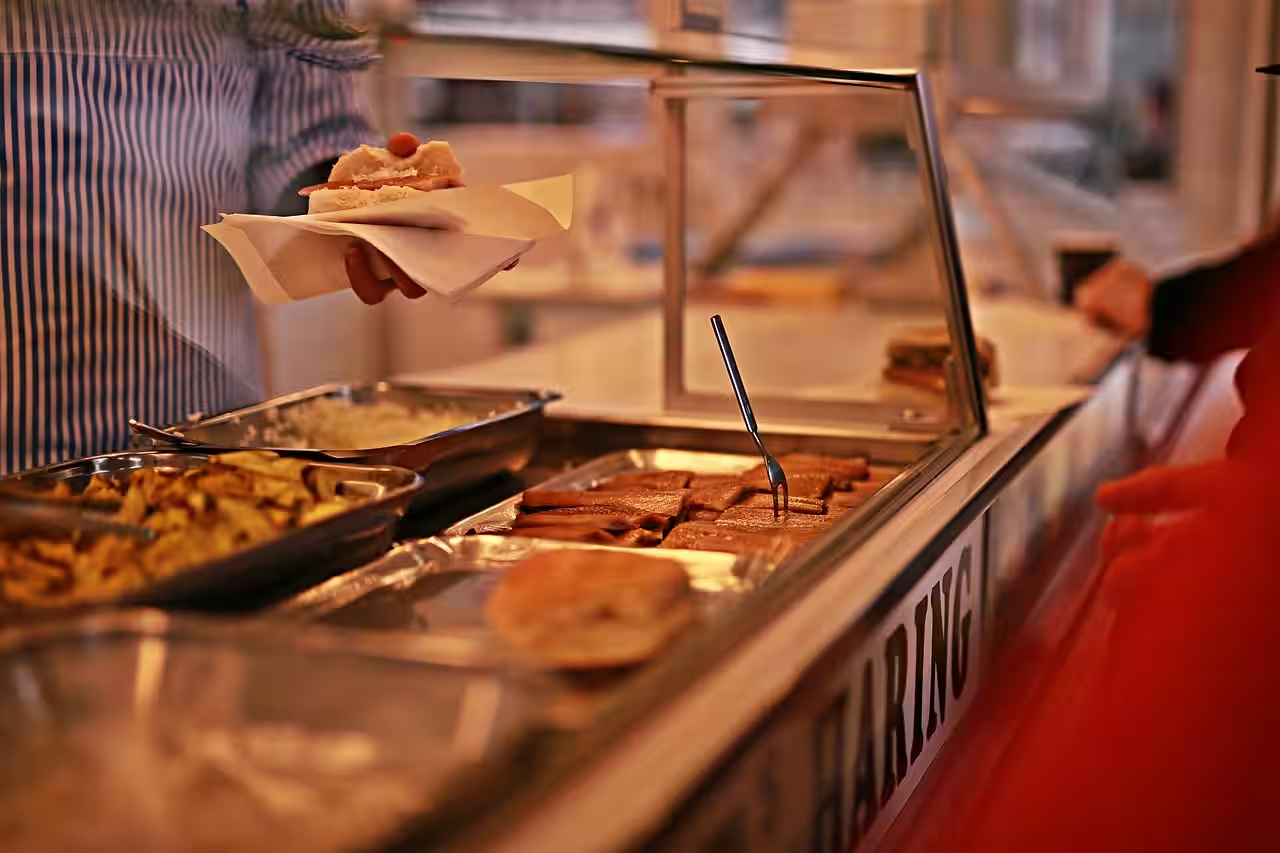
The Benihana model integrates performance into the culinary act. Teppanyaki, open-fire cooking, flambéing, carving, or plating in front of the customer turns preparation into a show. The immersion comes less from a set and more from the proximity to the kitchen and interaction with the chef.
This approach has the advantage of directly linking the experience to the product. It is also demanding in terms of recruitment and training. The employee must not only master a technique: they must know how to repeat it, explain it, and embody it without slowing down service.
The narrative restaurant: the meal as a story
The narrative restaurant builds the meal as a story. Dishes can correspond to chapters, the atmosphere can evolve throughout the service, and the staff can guide the guest through a journey. Technology can enhance the setup, but it is not the core: a coherent narrative can also rely on products, terroir, seasons, or the biography of a place.
Ephemera Group pushes this logic toward complete universes. Other establishments choose a more discreet immersion, where the menu, service gestures, and sensory transitions are enough to create a progression. The more complex the narrative, the more critical the synchronization between the kitchen and the dining room becomes.
The hybrid venue: the restaurant as an ecosystem
The Bus Palladium illustrates a fourth model. Immersion does not depend on a single theme, but on the density of uses: sleeping, eating, having a drink, listening to music, and extending the evening in the same building.
This model is particularly interesting for real estate assets because it spreads out opportunities for foot traffic across multiple times of day. It aligns with the logic ofplural hospitality : a venue composed of several coherent offerings that can reinforce one another without becoming blurred.
What makes an immersive restaurant concept last
The food remains the primary product
The stronger the visual promise, the more the food is subject to comparison. A guest might accept understated decor if the meal is remarkable. The reverse rarely works. The spectacle attracts, but the culinary quality determines recommendations and repeat visits.
The menu must therefore extend the theme without becoming a mere accessory. Nautical decor calls for true mastery of seafood. A concept centered on fire must build its offering around the cooking methods and flavors it promises. Consistency must be found in the plate, the service, and the price.
Operational execution makes the difference
An immersive restaurant adds constraints to those of a classic restaurant: synchronization of sequences, sound and lighting management, customer flow, equipment maintenance, staff preparation, and handling incidents without breaking the spell.
The promise must remain reproducible during a full service, with different staff members and real-world variables. A concept is not validated when it works in rehearsal, but when it holds up at the hundredth and then the five-hundredth service.
Renewal must be designed from the start
The element of surprise is a finite resource. Renewal cannot, therefore, be treated as a one-off marketing stunt. It must be integrated into the concept: seasonal changes, collaborations, new chapters, modular scenography, or event programming.
This logic can borrow certain mechanisms from the pop-up restaurant without making the establishment temporary. The goal is to create reasons to return while maintaining a recognizable identity.
The business model must absorb the scenography
An immersive concept requires additional investment: custom design, audiovisual systems, acoustics, lighting, maintenance, and training. Their impact varies significantly depending on the model. A show kitchen and a high-tech set have different costs and different renewal cycles.
The business plan must therefore isolate immersion-related expenses, test various attendance levels, and account for their renewal. Average check, capacity, private events, and operating hours can all contribute to profitability, but they must remain consistent with the market

How immersive restaurants are changing real estate
For a property company or developer, an immersive restaurant can become a destination anchor. It attracts customers willing to travel, generates visibility, and increases time spent on-site. This capability is of particular interest to commercial real estate firms looking to differentiate an asset beyond its retail offering.
However, operators often require more space, height, power, acoustic insulation, and flexibility. The lease and technical program must anticipate the evolution of the concept. Decor that is frozen in a space impossible to transform quickly becomes a liability.
The selection criteria should therefore not be based solely on the strength of the brand image. You must evaluate the team's experience, their financial capacity, the robustness of the model, and the precision of the operating plan. A spectacular concept that is poorly managed weakens the image of the entire real estate development.
Tomorrow Food's approach to designing immersive restaurants
Designing an immersive restaurant is not just about choosing a theme and hiring a set designer. The work begins with positioning: what is the promise, for which customers, and in what competitive environment? It continues with operational translation: menu, service, customer journey, team, technical constraints, and business model.
Tomorrow Food supports operators, investors, and property companies in creating high-experience F&B concepts. The goal is to connect creative ambition with realistic and sustainable operations.
Our principle: an immersive concept is not the one that impresses the most at opening, but the one that maintains its coherence once the novelty has worn off.
Contact Tomorrow Food to structure a coherent, operational, and differentiating immersive restaurant concept.